
Most of your weekend disappears into one question: who are these guys on defense, really?
AJ Woolley and the offensive staff at Austin Vandegrift, a 6A program in Texas, have built a weekly process that answers that question in minutes instead of hours, then carries it all the way to a hit chart the starting quarterback gets the final say on. Two pieces of that week are below. The front end, where they pin down a defense’s identity, and the back end, where they hand the quarterback the keys.
Video: AJ Woolley on Building the Defensive Blueprint with AI
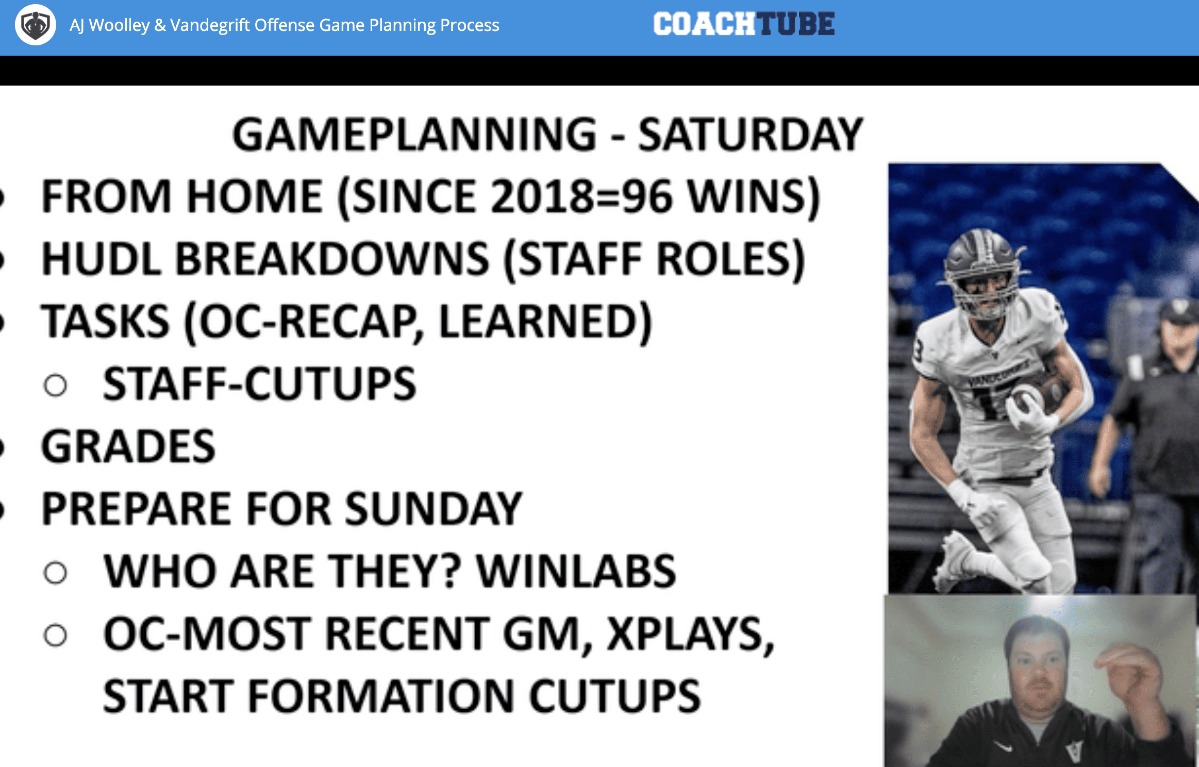
Saturday: Grade First, Then Ask “Who Are They?”
Before any game plan gets built, every play gets graded. As Coach Woolley lays it out, each position coach grades every play of his own position group so he walks into Sunday ready to talk about it. That grading isn’t just for the staff. It becomes something they can stand on when they reference a rep with the kids and decide what needs to change.
With the grades done, the planning starts with one question. “The first thing I like to do is really, who are they as a defense?”
That’s where the AI partner comes in.
The AI Powered Scouting Report: Two Minutes to a Defense’s Identity
Here’s the workflow Coach Woolley runs live in the clip, and the speed is the point.
He pulls the defensive cut-ups out of Hudl as an Excel file. Inside his AI Tool he clicks defensive analysis, imports the CSV or Excel, and the platform tags everything automatically. Fronts, coverages, whatever’s on the film. Scout looks good, continue, import plays. Then the big green button: view scouting report.
What lands on the other side is what he calls the grad assistant. An AI scouting report that, in his words, is “unbelievable.” He builds it in under two minutes on camera.
– Top fronts, served up immediately
– Top coverages, right there with them
– Who the defense is stylistically, at a glance
“Right away, you know who they are,” Coach Woolley says. And yes, he’s quick to admit you could get to this the old way. The difference is this is “incredibly easy and smooth.”
Where It Gets Useful: Tendencies, Not Just Structure
The identity is the start. The part Coach Woolley flags as the reason it earns a spot in the week is how far the data bends to what you’re asking.
He runs through the tendency breakdowns the report will give you:
– What people are using to attack them conceptually
– Blitz direction, broken down more boundary versus field
– Pressure to the back versus away from the back
– Run-pass split against them
“It’s not rigid,” he says. Whatever data you’re feeding it, it can break it down, and you can get into the weeds with the different graphs and features. A lot of those he saves for later in the week. But for this early conversation, the purpose is narrow and fast: “You can go through this in five, ten minutes, and have an idea of their blueprint and who they are.”
He clicks through the graphs and shows which features he leans on this early versus the ones he comes back to later in the clip.
Video: AJ Woolley on the Wednesday QB Meeting and the Living Hit Chart
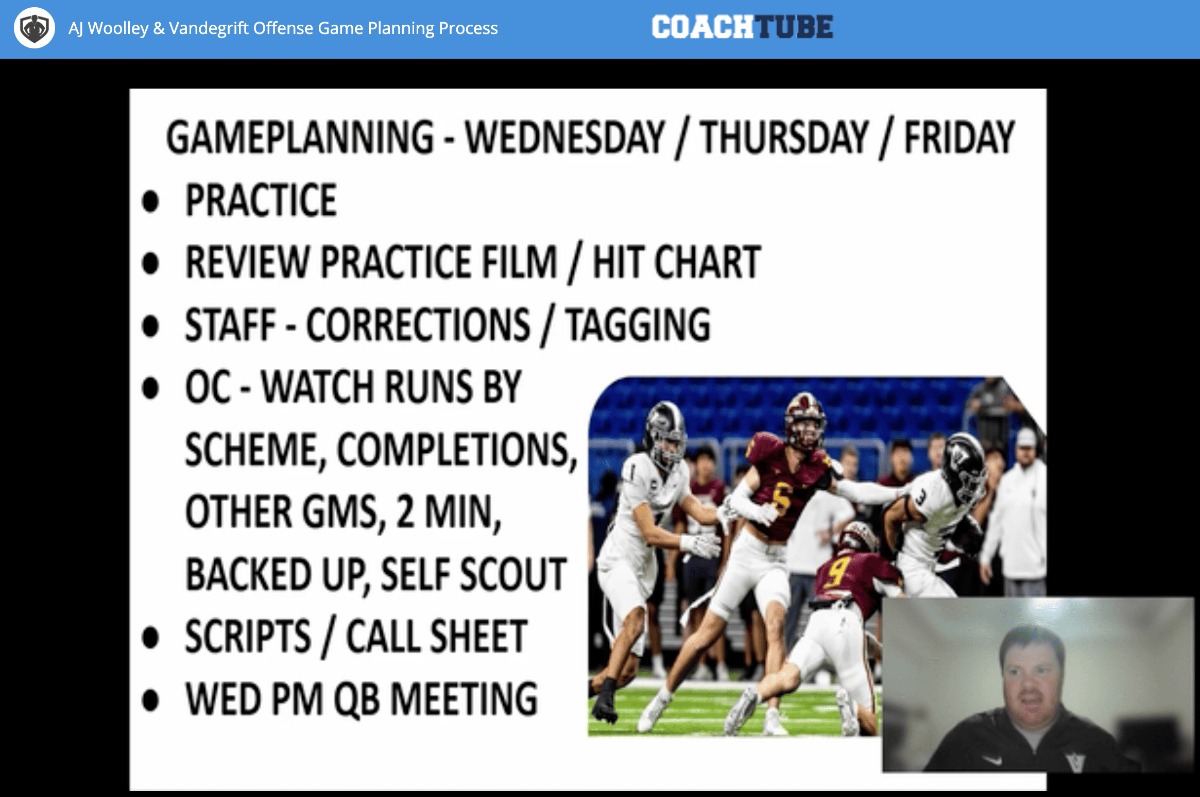
Wednesday: The Hit Chart Belongs to the Quarterback
By midweek the plan is mostly built. Wednesday after school the guys get up for recovery, some yoga or an ice bath, and then Coach Woolley, his quarterbacks coach, and the varsity quarterbacks sit down and go through the hit chart to that point.
He’s deliberate about what that document is. “It’s a living, breathing document.” Plays have been deleted. Plays have been changed. Notes are all over it. He goes through the whole thing with the quarterbacks, and primarily with the starter.
Then comes the rule that defines the meeting.
The Veto: “I Will Delete That Play 10 Times Out of 10”
Anything the starting quarterback does not like, they scratch.
Coach Woolley doesn’t soften it. He could love a play. His coaches could love a play. But if the starting quarterback doesn’t like a passing play and has real, articulated reasons why, “I will delete that play 10 times out of 10.”
The reasoning isn’t about the play. It’s about what handing over that veto buys him. It creates ownership between the quarterback and the offense, and it builds trust between the quarterback and the coordinator. “That’s one of the best things I think that we do.”
The how matters as much as the what. The standard isn’t a quarterback who just doesn’t feel like running something. It’s a quarterback who can articulate why. Coach Woolley gets into how he runs that conversation in the video.
The week starts with a machine telling you who the defense is in two minutes, and it ends with a teenager telling you which of your throws to throw away. One buys back your weekend. The other buys the buy-in you can’t script. Together they’re the spine of how Vandegrift game plans.
This article is two days out of a full week. The complete clinic is Coach Woolley and the Vandegrift staff walking through their entire day-by-day game planning blueprint, including how they pull their AI Tool back out later in the week for the deeper tendency work, how they translate the scouting report into practice structure, and how the data becomes game-day calls. If the two-minute scouting report and the hit-chart veto were useful, the full week around them is where the system actually lives.


