
Kenny Simpson, head coach at Southside in Batesville, Arkansas, created the Gun T RPO Offense that hundreds of coaches are now running across the country. His results speak for themselves: 23-3 over the last two seasons.
In this clinic, Simpson breaks down one of his favorite ways to involve the tight end in the passing game through a simple RPO concept. The best part? These principles translate to any offense that uses a tight end or wing back in combination with RPO concepts.
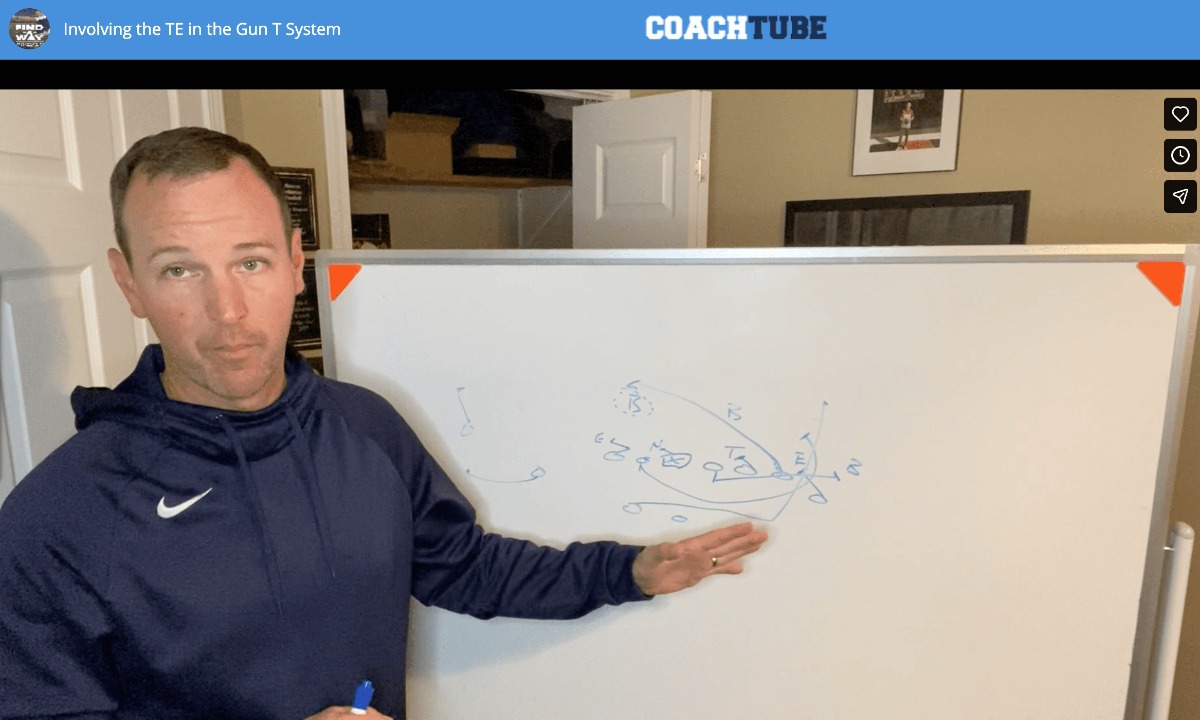
Buck Y Peak: A Built-In TE Target
Simpson calls this play Buck Y Peak. The concept is straightforward: run Buck with a peek route from the tight end.
“We’ve run this now in every single game so far,” Simpson says. “Has not been stopped. It’s always been there. Probably should run it more.”
The beauty is in the flexibility. The RPO read comes off whoever would normally be blocking a linebacker anyway.
How the Rules Work
The blocking rule is simple: gap, down, backer.
Simpson walks through the reads:
- If the tight end has a 3-technique (outside shade), he’s free to run the route because the linebacker is his man
- If there’s a 5-technique and outside backer, the tight end blocks down and the wing back runs the route instead
- If both players are supposed to block (say, a 5 and a 9), send the wing back and tighten the run
Coach Simpson teaches the QB that the defense is the one that will make the decision for you.
The Quarterback Read
The QB reads the backside inside linebacker, same as any normal peek RPO. He doesn’t care whether it’s the Y or the wing running the route. His eyes stay on the linebacker.
“If this guy flies, I know I’ve got to buy a little bit of time, but I’m gonna put that ball in this nice window. Put it on the tight end or the wing back so you can catch it and run with it.”
Why It Works
- No coverage beating required. The tight end just has to get where he’s supposed to go
- Built-in man-killer. Against man coverage, there’s nobody else on that side of the field
- Forces the defense to declare. You get your one-high or two-high read, which tells you when to run it
Simpson’s point is worth repeating: this isn’t a trick play. It’s a way to get the ball to your tight end within your existing RPO structure, letting him make plays in space without asking him to win contested routes.


